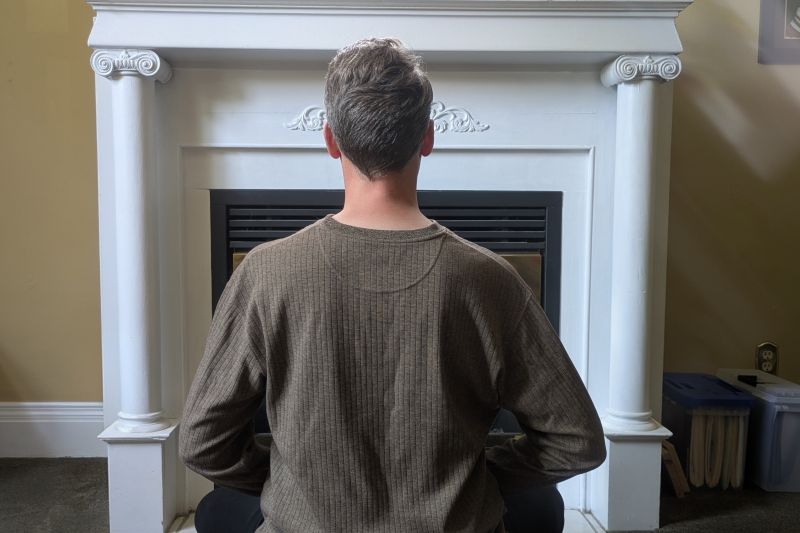
I started to study Zen Buddhism more than thirty years ago, and started meditating in high school. But it was only a few years ago that I first sat a sesshin (an intensive meditation retreat) that lasted more than a couple of days. I had been interested in this intensive practice for years, almost since I had learned about Zen. At that time, I didn’t know of any temples or Zen centers near my rural hometown, so I never saw any options to explore meditation retreats.
Later, once I had moved to a larger city and was practicing with a sangha, I still never found my way to sesshin. As primarily a lay practitioner, there always seemed to be challenges to stepping out of my regular routine for more than a day or so at a time (graduate school, work, family, etc.). I see now that the bigger challenge was likely that while I had established a fairly regular meditation practice, I was more fond of the idea of meditation than I was of the actual, moment-by-moment experience of zazen. Looking back now, I think that my situation was similar to to a person who has taken up running – because they believe at an intellectual level that exercise is good. But, they don’t really enjoy running, and the activity is more closer to work, or a necessary chore. So, it’s not really surprising that I shied away from sesshin back then.
I did do a few short retreats during graduate school, but never more than a couple of days at a time. It wasn’t until more recently, after reconnecting to regular practice, that I became serious about sitting a full sesshin.
I’m not sure what really had shifted for me, but from the very beginning part of what had brought me to Zen was a hope to see reality a bit more clearly and deeply. And, I felt that retreat experience could be an important part of my practice, to help me better understand the teachings I had been working to live out. So, I decided to sit a five-day sesshin at a temple in my region, though I still had reservations.
In fact, as the starting day approached, I remember a friend asking me about the retreat, and he was curious to know if I was excited for it, or if I was looking forward to a relaxing and restorative experience. He seemed a bit puzzled when I smiled, and said that actually, I was mostly terrified. I didn’t really know if I would be able to do it, or be able to actually make it through the entire schedule.
In the end, I was right to be worried. I had been working diligently to prepare: sitting regularly and more often than usual, closely studying texts from this temple’s lineage on sesshin, and looking for advice on what I needed to do to be prepared.
All of that was helpful, but even so, I was not fully prepared for the reality of sesshin, physically and mentally. Sitting period after period on a zafu was punishing for my middle-aged body. Often the pain became overwhelming, and I found myself scrambling to find other postures (with benches, chairs) that could help me manage the deep discomfort. Along with the pain, there was fatigue, of course, and also great waves of restlessness.
I remember periods when the bell would ring to start the next 50 minutes of sitting, and panic would rise in me, resonating with the tone. I felt trapped, cornered, in those moments, and spent a good deal of time just sitting awash in those roiling feelings.
Other challenges arose: on the second day, some visual patterns that started appearing, as if the wood grain of the wall was gently flowing up, or that the knots in the wood became animated figures. While distracting, I found that by adjusting my gaze, closing my eyes slightly further, and taking off my glasses, these mild visual hallucinations were softened.
In the end, I did make it through the entire five-day retreat (though, it might be more true to say that I survived it), and I came out the other side of sesshin with a sense of relief and elation.
Since that first experience, I’ve made the effort to come back to sesshin regularly, at least once a year. When I think about what brings me back to sesshin, partly I find that I come back because I find that I am able to come back. Physically, the first experience was very challenging, but I’ve found ways to work with the worst of the pain (finding a set of options for sitting postures that I can work with, finding ways to head off visual hallucinations, etc.). That has made it possible, physically, for me to come back.
Second, while I still feel periods of fatigue, distraction, and restlessness, I’ve also found it easier to settle into the container of sesshin. There are still periods of pain, resistance, distraction and such, but overall, I have found that the time passes peacefully, and pleasantly.
While it is true that I’ve experienced periods of peace during sesshin, I don’t find myself coming back to sesshin to seek out these experiences of tranquility. There is something supportive for exploring sesshin, I don’t believe that feeling some particular way is the goal of practice, or really valuable in itself.
Originally, I think that I came to Zen because I wanted to know something, with certainty, about the nature of reality. Probably because of this, some part of me hoped for, or reached for, some kind of sudden revelation to come to me in the middle of zazen. Even though – at least intellectually – I can appreciate the trap of practicing with a gaining mind, the traces of that grasping can be subtle, and hard for me to really see.
I have had a range of experiences in sesshin, and even in that first experience of sesshin, but nothing that stood out as a sharp, specific kind of insight. Probably, these have all been in the normal range of experiences you might expect after spending hour upon hour staring at a wall. In that first sesshin, probably the most notable experience was a sense that my sense of self (the somewhat heavy or solid, self-conscious, awareness that I notice often in my moment-by-moment experience) felt a bit quieter, softer, during the retreat and for some days afterwards. There was something peaceful about that experience, and I appreciated it, in part because I was surprised by it. But if I was hoping to get something more concrete from this practice, I ended up leaving empty handed.
In the end, I feel today that this (lack of) insight was probably a gift. While part of me had always reached for certainty over ambiguity, I’ve become more wary of the certainties that might emerge from a specific experience (in meditation or otherwise). In part, this is because I am concerned that what I’ll find there has more to do what I carry in, rather than something that is true about reality. However, I do feel that some of the questions I have about reality feel more settled for me today than when I came to Zen back in high school.
I have come to accept that interconnection and emptiness are deep truths about reality, and much of my life today rests on this foundation. I did encounter teachings about these truths most directly through my study of Zen, and in learning about the natural world all around us. Nothing exists alone and separate. This is true of everything that lives, and at a deep level, it seems to also hold some truth about the very core of everything that exists. Everything is empty of an enduring, or permanent, self-nature. We see the truth of this each time we try to pin down any specific thing in the world. Every living thing is a process, endlessly in flux. And this is true of the inanimate objects around us: seeing one rock as separate from another has a usefulness as we navigate the world, but it can also be easy to see the label as more real than the direct reality in front of us.
And, I feel more comfortable with the idea that rather than being a source of these ideas, sesshin has been a particularly valuable place to explore what it means to live out these truths, moment-by-moment, in a healthy way. As I have given up (or at least become more aware of) reaching for a special kind of experience (calm, peace) or insight (some kind of new belief or certainty), I have come back to sesshin explore living out interconnection and emptiness thoroughly, without the possibility of escape or distraction.
That is not to say that I feel that I really understand sesshin yet. The experience is endlessly rich, and subtle, and I’ll often find myself trying to get my bearings on the cushion. From time to time, I’ll find myself wondering, what is it that I’m doing right now, here on this cushion? And, I’ll come back to teachings that have resonated most deeply with me, like Uchiyama’s Opening the Hand of Thought. I have a copy that I bought decades ago, and over the years I’ve found myself returning to it again and again. For a long time, I have puzzled over Uchiyama’s advice on zazen, such as “… the essential point when doing zazen is to aim, full of life, at the posture of zazen with our flesh and bones, while at the same time leaving everything up to the posture and letting go of thoughts.”1 Investigating, curiously, patiently, what it means to aim at the posture of zazen, full of life, and to let go of thoughts, has been a riddle that I keep coming back to in zazen.
That first five-day sesshin was very challenging for me, and I still have experienced pain or difficulties during sesshin. There is nothing inherently wrong with experiencing some discomfort in the body while sitting, but it can be draining to sit through intense pain.
Similarly, sitting peacefully is certainly more pleasant, but there is nothing especially valuable – in itself – about feeling good while sitting. I have certainly experienced pleasant moments on the cushion, but also noticed that my mind was a bit unfocused, or zoned out. These moments felt peaceful, but in a way that was adjacent to sleep, and not full of life.
Other times, there has been an intensity of experience, feelings of elation, or a trembling kind of joy, almost as if one was on the threshold of something. These experiences also have tones of pleasure, and perhaps a greater feeling of life in them, but in a way that feels adjacent to a fever, or of too much. These experiences make me think of Keizan’s advice in Zazen Yojinki, “during zazen, your body may feel hot or cold, rough or smooth, stiff or loose, heavy or light, or astonishingly wide-awake. Such sensations are caused by a disharmony of mind and breath.”2 Instead of getting caught up in such experiences, Keizan encourages us to see them as distractions or delusions, and not something to chase after.
So, while I don’t think that chasing after a feeling of peace in zazen, or after any particular pleasant sensation, is the aim – or goal, or end – of zazen, I can see that aiming peacefully at this posture has been supportive in my own experience.
When I reflect on the value of sesshin in my own practice, the image that has come to me is that of zazen, and sesshin in particular, as a filter. My first full sesshin was difficult for me in a sharp way. In the challenging moments, it felt as if some rough part of me had gotten caught on the container as sesshin, showing up as suffering during pain, uncertainty, boredom, restlessness.
When sesshin has passed more peacefully, the difference has come in part by exploring (or I could say, resting in, relaxing into) the mind that can pass easily, peacefully, through sesshin. Not because it is spaced out, or unfocused. Rather, this is the mind that is full of life, coming back, moment-by-moment to the posture of zazen as the only activity. Letting go of the story of I, myself, sitting and exploring just sitting. Letting go of before and after, or here and there, trusting that each will be on hand when they are needed. Sesshin is a special, precious container, where we don’t need space and time. Resting on our trust in the jikido to keep time and manage the space of the zendo, in our fellow practitioners to support one another in our efforts, we can let go of everything and aim, moment-by-moment at the posture of zazen.
Today, while there are still periods of fatigue, of restlessness, times when I find that part of me doesn’t want to sit, I find myself catching on sesshin less often. While zazen is endlessly rich and subtle, and difficult to point to in a clear way, I generally leave sesshin with the feeling that it has passed easily, and in a timeless way. Perhaps that won’t be true in the future, perhaps these feelings have only been a temporary arrangement of causes and conditions. But it has resonated with me as something important, but not as an accomplishment, it’s not something that I’m proud of. This is the same mind that I try to bring into each moment of life.
Off of the cushion, and out of sesshin, space and time are, of course, indispensible. What I hope to carry with me as I leave the cushion is not a state (some kind feeling, or experience), but the posture of zazen, exploring if I can meet each moment, full of life, and letting go of some of the self-focused thinking that often comes so easily, reflexively to mind.
Like zazen, it is not really my goal for my moment-by-moment life to be pleasant, but a sense of ease, openness, (and yes, pleasantness), can be supportive in relaxing any defensiveness, reactivity, and such that show up in life. In this, I feel that I’m exploring the mind that passes through each moment easily, pleasantly, but in an engaged and active way. Avoiding the option to maintain a feeling of equanimity by pulling back, holding the world at arm’s length. Or, in being drawn in, almost in a feverish way, to tension and conflict. Even this, itself, is not my goal or intention, but it feels important to me, to approach life in this way, to make my best effort to support my own well-being, and that of everyone I interact with.
- Kosho Uchiyama (1993), Opening the Hand of Thought, p. 66 ↩︎
- Keizan Jokin, Zazen Yojinki, reprinted in Soto Zen: An Introduction to Zazen, published by Sotoshu Shumucho in 2002 ↩︎