Categories
Practice Science

Calming our cravings

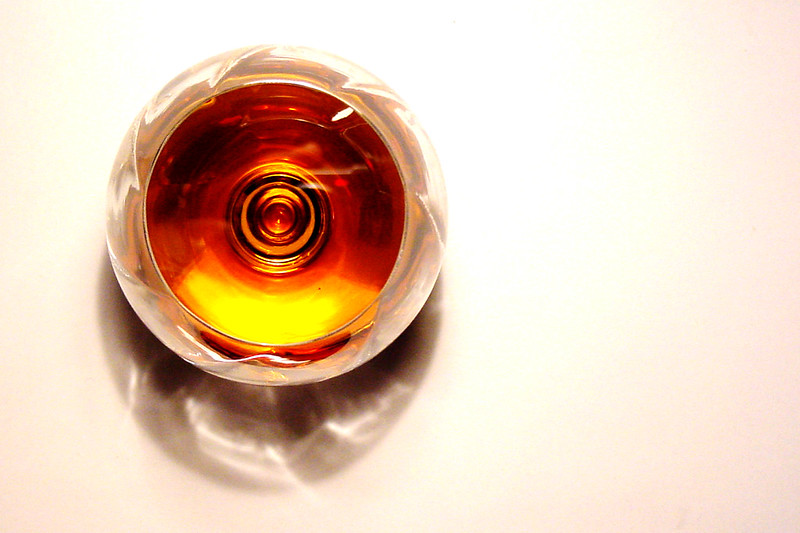
Cognac: Spot by Shaylor (flickr)

All around me today, it feels that many people find themselves immersed in craving. Much our consumer culture rests on a foundation of creating an urge to immediately purchase something or engage in an activity, encouraging impatience and baking craving into our culture. At the same time, many people are ambivalent about the impact of craving on our lives, and fear that that excessive desire will transition to dysfunction and addiction. Even so, many of us feel resigned, and do not see a path to calming our cravings.

While I have never personally struggled with an addiction, I’ve certainly felt intense desires, and found my life unsettled by the fever of craving. Perhaps the first time I noticed this was in high school, back in the 1990s. At that time, access to the internet was rare, but I attended a public residential school focused on science and math, and we had excellent internet access in our computer labs.

At some point, maybe in my junior year, a friend introduced me to a simple online text-based game (a multi-user dungeon, or MUD) based on the Tolkien’s Lord of the Rings books. While it lacked the polish of modern video games, I found myself consumed by this fantasy world as I became more invested in my character, and enmeshed in the relatively small online community. Slowly, I became more and more preoccupied with the game, spending much of my time outside of class in the computer lab, and eventually entire days on weekends.

At some point, people around me recognized that I had fallen into an unhealthy rut. They staged an impromptu quasi-intervention, and I found myself physically carried out of the computer lab. I remember being very angry, mostly out of embarrassment, but that moment did bring into focus how dysfunctional my relationship to this game had become. I could see that my life felt off balance, but for a time I still struggled to make a change and disengage from the game. In the end, I gave it up entirely, as I found that it was too difficult for me to continue to play without being pulled into preoccupation and obsession.

Since high school, similar things have happened with a few other games. While still challenging, those periods were easier to deal with, in part because I had become more aware of my own susceptibility. Also, it helped that as I’ve grown older, I quite honestly feel that I don’t want to spend hours of my limited time playing these kinds of games.

As for other kinds of addictions, I have never experienced truly intense challenges, for which I am thankful. Though I enjoy the occasional drink, I’ve been fortunate to never experience a strong draw towards alcohol or drugs. I have experienced intense, usually transitory, desires in other areas, like cravings and urges around food or sex. Or less intense, and longer lasting cravings that can draw me in to binge an excessive number of episodes of a show, or eat most of the junk food in our house (or to waste money on lottery tickets).

While none of these areas ever became dysfunctional in my life, I do remember that in some of the more intense moments when I was younger, I wished for some way to silence these cravings. I wondered if there could be some kind of drug that could go in to my brain cut off craving at its roots.

This wish to be free of craving might be part of what helped me be open to Zen practice. I was very interested to encounter teachings that pointed to greed and craving as one of the key ingredients in our suffering, and offered a path to end craving. However, when I first encountered these teachings, I think that for a long time I struggled to really understand what a healthy life without craving looks like.

Reading respected texts in the Zen tradition, I came across advice to give up our worldly sentiments, including our preferences. Or in the advice to monks to even to give up their families, which called back to the image of Siddhartha Gautama leaving his home and his wife and child to pursue practice. It seemed that the path being recommended to truly cut off craving might include severing my affections to other people, which did not feel like a healthy way to live. So, while I had some faith in the practice, I was also uncertain about what these teachings were really pointing to, or what it would mean for me to live that path today.

More recently, I was glad to come across the recent book, The Roots of Goodness, which I was reading for a discussion group. This text is a translation of Kosho Uchiyama’s commentary on Dogen’s Hachi Dainin Gaku (the eight qualities of a “great person,” or in Uchiyama’s words, a true adult) has been a real treasure for me as we explore what it means to carry practice into our whole life. The two first qualities – “having few desires,” and “knowing one has enough” – touch directly on craving, and Uchiyama’s commentary resonated deeply with me as I chew on what it means for me to live today with “few desires.”

It has also been helpful for me to look at these teachings through the lens of psychology and neuroscience. Research in these areas have explained the origins of liking (our actual experience of pleasure) and wanting (our desire to move toward that which we think we like) in a way that I think complements Zen practice.

Liking and disliking seem to be given in our lives, just as immediate and direct to us as our experience of color, or sound, or taste. But in themselves, there is nothing in the world that is inherently pleasant or unpleasant. The quality of pleasure or displeasure is fundamentally about how an event or stimulus is interpreted, or about its value to us. Pleasure and displeasure depend on specialized circuits in the brain, especially on deep structures such as the nucleus accumbens, and the ventral pallidum. Neuroscience studies suggest that these areas are critical to processes that have been called “core liking,” the basic step that the brain has to take in order to point to an experience as pleasant or unpleasant.

In these areas, the brain’s own opioids are key in signaling pleasure and displeasure. These natural opioid systems are the same ones that are exploited by drugs like oxycontin or fentanyl. In studies of rats, tiny injections of opiate drugs that manipulate directly into these systems can dramatically affect measures of liking (often measured using facial reactions).

Depending on where these drugs are placed in the brain, activating opioid receptors can dramatically increase liking facial reactions (lip smacking, and turning toward the taste) to a somewhat sweet compound, or dramatically decrease aversive facial reactions (gaping facial expressions, and turning away from the taste) to a bitter one.

Humans have similar opioid systems, and our own opioids are likely constantly tuning our responsiveness to any given sensation. This subtle tuning of our brain’s pleasure circuits is probably an important part of why the amount of enjoyment that we get from any particular experience (say a bite of chocolate) can depend on many factors, such as the needs of our body, the context we are in, and even our expectations about chocolate.

While this variability in how the brain responds to a reward may feel a bit capricious, or even unfair, it is an important part of how the brain orients us to focus on what is valuable. We generally experience something as pleasant if it is (or, if we believe that it is) helpful to continue our existence as an individual (such as food) or as a species (such as sex). Even our more abstract pleasures are fundamentally rooted in our well-being, as the pleasure that we take in learning about the world around us and in the company of others are critical to our species, and our ability to cooperate together with others. The ability to tune our liking and disliking allows us to shift our focus towards what is most valuable to us in the moment.

Desire, or wanting, is closely connected to our likes and dislikes, and the experience of desire can be colored by feelings of pleasure or displeasure. We can feel anticipation as a pleasure as we feel we are drawing close to something that we want. We can also feel desire as unpleasant, as we are impatient or feel obstructed from the object of our desire.

But, desire is a fundamentally a motivation, which propels us to move toward that which we want, and to move away from that which we do not want. Desire, or the experience of wanting, is born out of the gap between where we are and where we want to be. Or, where we imagine that we could be. Our brain’s opioids are likely important for the feelings of pleasure and displeasure that can come with desire. Other systems, such as the dopamine released in areas such as the striatum or nucleus accumbens, seem more important for wanting than for liking.

Infusions of drugs that trigger dopamine receptors directly into the brain do not seem to have a strong impact on liking or disliking in rats (as measured by facial reactions). Rather, these drugs have a powerful effect on wanting, and can increase food consumption dramatically. This is one of the reasons that drugs which act on dopamine receptors, either directly (cocaine, methamphetamine) or indirectly (alcohol, nicotine) can be addictive: they can recruit the circuits in the brain that trigger our desire.

Craving can be seen as a very intense form of wanting, falling on the far end of a normal continuum of desire. If we are very much in need of food, then experiencing something like craving is very natural and normal, as we need to find sustenance to survive. More often, we may notice craving most clearly when we are drawn towards something that we don’t really need in order to live: playing a video game, placing a bet on a game, watching pornography, eating rich foods, and such. When I think about what it means to have few desires, or to know that I have enough, I am more concerned with these kinds of moments of feverish desire than with normal pangs of hunger.

What then is the path to calming unhealthy desire? Early in my practice, I did think that teachings around attachment and desire were pointing towards the elimination of liking and disliking, or even feelings in general. Technically, this would work to eliminate desire: if we don’t enjoy anything, or dislike anything, then we never need to seek out a different state. Generally, though, a total lack of pleasure or displeasure is not a settled, balanced position, but rather a symptom of psychological challenges, such as depression. The total extinction of liking and disliking can be a great hindrance in our ability to function skillfully in the world.

Without getting rid of pleasure, it can still be possible to work more skillfully with desires and to calm our cravings. Research on meditation, and especially mindfulness-based approaches, have shown promise in this area, and can reduce craving for individuals dealing with substance use. Some of the impacts of mindfulness on cravings seem to come from shifting how people experience rewards. One important practice comes from encouraging people to more directly attend to and savor everyday positive experiences. By opening up to noticing the pleasant aspects of ordinary experience, one can find that there is an opportunity to experience pleasure even in the moments that we often pass over.

And, by also becoming more open to noticing one’s actual experience when using a substance, one may have a direct insight that many of the effects of a drug are actually unpleasant, or fall short of one’s expectations. This combination of cultivating positive emotions for natural rewards and reshaping how drug rewards are perceived can shift how the brain responds to natural and drug rewards. And this process appears to be important in decreasing drug cravings in people struggling with opioid addiction.

The body of research in this area has been very helpful in identifying some of the important mechanisms for how meditation can be supportive in calming intense cravings. This kind of knowledge is interesting even to people who are not dealing with the challenges of addiction. And, this work can be helpful in our practice, by giving us a better sense of what the specific impacts of practice may be.

But I think that the deeper point for our practice is that having few desires goes hand in hand with knowing what is truly valuable.

Liking and disliking are grounded at their roots in that which supports life (our individual lives, and that of our species). So, it makes sense that cultivating pleasure for everyday, natural rewards over drugs is a healthy shift. We should not stop there, though, and we should continue to explore what is truly valuable in life. This is especially important when it seems so easy to be captured by the pursuit of money, influence, recognition and the lot. Each may be useful, but at their heart, they are not valuable in themselves.

As Uchiyama points out later in his commentary on Hachi Dainin Gaku, it is our very life that is most valuable:

… my life is what is most important – this must be our most fundamental value. This value is not something given to us by society. The living force that flows through me is a value this is more important than anything else. The living force that I am speaking of is of one life that is inclusive of all the dharmas, all the dharmas are identical with one life.

Uchiyama, The Roots of Goodness, p. 201

I’ve come to appreciate the importance of this point, and believe that it is one that is worth exploring closely and carefully. And, while I can’t express the subtleties of Uchiyama’s point here (or probably at all!), I do want to mention how much I trust very deeply in the point that life itself is most valuable. Not our individual, or personal life. And also not life in the abstract (some intellectual appreciation). From our position as living beings, what could be more valuable than life itself?

If we step out from the position of life, and consider that of the Earth, or our solar system, or the universe, there we find that nothing is valuable, and so is nothing good or bad. Good and bad depend on having something that you value, and value itself depends on the ability to have some kind of goal or preference. From the position of a rock, there are no preferences, and nothing has value. A rock sits with an indifference that is fully outside of the understanding of a living being.

As living beings, we do not find ourselves sitting in the position of a rock, and from our position, there is good and bad. And what is good, what is most valuable, is life itself. Life has an aim, toward continuing life. Not just the life of one individual, or one organism, or one cell. Life as an individual makes no sense at all, as each living being only exists in a set of relationships with other living beings.

We will sometimes talk about the “web of life” as if it were something abstract, or separate from us personally. But the connections between living beings are deep and connect every living thing on our planet. Take any single living being and place them on Mars, and they cannot survive. If life were to ever to truly flourish on Mars someday, it will not be as an individual, but as a community, working together to support life.

Life itself is most valuable to life, and we can truly be at peace if we understand this point. Not an understanding that is just in our thoughts or beliefs, but in our bodies and in our flesh and in our bones. If we truly appreciate living – not as an idea, but as this direct moment – then likes and dislikes will still be with us, but perhaps shifted a bit. If each moment of living is truly valuable, then the so-called ordinary moments may not feel as drab or mundane. Even unpleasant moments can be held a bit more kindly, with the appreciation that these are moments of life are precious.

Knowing that life is most valuable invites us to appreciate where we are. Craving evaporates in a moment that is truly savored. At the same time, this is not a path of complacency or stagnation. To truly value life is to treasure it, to take delight in living, and in the same moment to see clearly the need to care for life. To aim our efforts towards continue to allow life (our own, our communities, our world) to flourish in a healthy way. As we move toward what we value – supporting life – we will find desires still come and go, but perhaps with somewhat softer urgency, and we may find that cravings lose their heat.
Sign up for our newsletter to get our latest essays delivered to your inbox. We don’t spam! We will only use this address to send you our latest posts and news.

Categories
Practice Science Stress

Finding the root of anxiety

I remember a time, when my daughter was young, and we were heading home after her rehearsal for a play had ended. Someone called out a question behind me as we stepped into the crosswalk, and without a thought I looked over my shoulder to answer. Turning back around, I was face-to-face with a minivan that had been making a left turn. It had almost come right through the crosswalk, and through both my daughter and I.

By the time I turned and saw it, by the time I had even registered it, the van had already lurched to a sharp halt. Fear, sharp and immediate, stabbed at me in that moment. I still remember feeling that it was so close that I could have easily reached out my hand to touch the hood of the van. The driver, perhaps a parent of another child leaving that same rehearsal, had a look of shock on their face. I forced a tight smile, waved to say, “don’t worry, we are ok!,” and finished crossing the street. Holding my daughter’s hand a bit tighter.

Fear can be such an unpleasant experience that we might think that our lives would be better without it. But would that be really true? Looking closely, I can appreciate the value of fear. Not the experience of fear itself, but the very capacity to fear. Like a “rumble strip” running alongside a highway, it buzzes and jostles us if we drift out of the safe path. Fear grabs our body and our attention when we are face-to-face with a threat, real or imagined. We feel that rush of adrenaline and stress hormones, preparing us for a vigorous response. Our attention may narrow, drawing our focus towards dealing with the situation.

Even the very unpleasantness of fear itself can be useful, motivational – even if we are not harmed, we want to find some way to avoid these risks in the future.  So really, the value of fear – as a capacity – is easy for me to understand. An important guardrail against complacency, or overconfidence.

But anxiety, that close cousin of fear, has often felt like an entirely different matter to me. The roots of fear are in the dangers that seem to be in front of us, and in something that should be dealt with. The center of anxiety seems to be somewhere else, grounded out ahead of us, in the future. Not in what is here and now, an immediate threat, but in what is coming. Or, maybe even just in what might be coming.


Our kids attended third grade at a local school only a few blocks from our home. We were very lucky, really, that it was only a short walk or bike ride to school. Once our oldest child had settled into the route, we trusted them to make that trip on their own.

Part of me, though, was never really comfortable with the idea. Like many parents of our generation (maybe of any generation?), I worried about all the things that might happen on their bike ride to school. There were no particular risks that seemed likely, but even so, there it was, a sense of unease.

My fear sprang up in the moment from seeing a van heading toward my daughter, and my anxiety radiated diffusely out of all the “maybes” and “mights” of what might happen on a bike ride to school. So, I did worry about that trip, and especially about the highway that ran between our home and the school.

I see now that at a deep level, some of my anxiety came from how I saw my role as a parent, and how I should be able to protect my children from all harms. And that is not unreasonable, really, to understand the importance of caring for the safety and wellbeing of our children. But I didn’t see clearly at the time how it could be a different thing, to believe that this meant that I should be able to prevent every danger.

There is a line from the movie, A Quiet Place, that brought this attitude into focus for me. When their children are in danger, in a moment of panic, Emily Blunt’s character asks, “Who are we if we can’t protect them?” Who are we, indeed? Her question resonated with me, and I felt it captured something true about what I felt that is meant for me to be a parent. But when we look closely, our situations were not symmetrical: Emily Blunt was protecting her fictional children (from aliens), and my kid was riding a bike to a neighborhood school.

Anxiety is not the only flavor of suffering in our lives, but it is an important one. Sometimes, it feels like we live in an anxious time. Triggers for anxiety can come up suddenly and easily. So much so that we might feel justified to believe that a threat may jump up at any moment: in each text notification, in each email, or even in the silence (of an expected call). 

Do we need this? To be afraid of all of that which might not even be a real danger, and might not even happen? On the one hand, it seems like time and energy wasted. On the other hand, even if the risks seem unlikely, they can be difficult to set aside.

Sometimes, I feel that we approach anxiety – or any negative part of our experience – as a defect, or a corruption of our natural state. As a neuroscientist, though, I feel that this view doesn’t really fit the reality of our lives.

Pain offers a good comparison. Pain, especially when extreme and unrelenting, can be a significant source of suffering in our lives. But at its most basic level, pain exists to serve a function. Pain pulls our attention to damage in the body, moves us to take steps to protect ourselves and to allow space for healing. I don’t see any particular reason to celebrate being in pain, but I can appreciate how pain is bound up in how the body takes care of itself.

Just like the experience of pain, anxiety is a natural part of experience, and not necessarily an error. After all, dangers can (and do) come suddenly and unexpectedly. Looking ahead for those risks, we may be better able to avoid the danger, or better prepared to deal with it when it arrives. Fear has its use when a van is heading towards you and your child, and anxiety has its use when it brings us think carefully about if our child is safe making their own way to school.

And so, we are not really surprised to find that just like pain, the capacity to feel fear and anxiety depend on specialized circuits in the brain. You might be familiar with the amygdala, a pair of almond-shaped structures that sit deep in brain, roughly behind our temples. The amygdala are critical in recognizing the emotional color or tone of a situation, such as recognizing threats, and helping to start our efforts to respond. People who lack amygdala are largely freed from the experience of fear, even in very intense situations (one person was robbed at knifepoint, and felt no panic).

Another brain structure, the hippocampus, is well-known for its role in learning and memory (for instance, problems in the function of the hippocampus are a key cause of the memory impairments that are seen in the early stages of dementia). But, the hippocampus is also involved in emotion, and that part of it is tightly connected to the amygdala. Recent research with mice has shown that the cells in this part of the hippocampus are important for the experience of fear and anxiety. Largely separate sets of cells are active for each emotion: fear and anxiety turn on different circuits in the hippocampus of rats, suggesting that even in rats, the ability to be anxious is built into the brain.

If anxiety is a natural part of our experience, if it serves a function, then should we simply accept anxiety as right and inescapable? Again, the comparison to pain is helpful. Pain serves a useful function when it calls our attention to injury, helps us protect against further damage, and supports our healing. People who lack the capacity to feel pain are at great risk to suffer grave injuries.  And also, pain that becomes too intense may interfere with our ability to function in our life. In these cases, pain may no longer useful. Like pain, anxiety can serve an important function, helping us to avoid threats that may be ambiguous, or which may be coming in the future. But, our anxiety can be misaligned to our reality.

Excessive anxiety can spring from many places, and one source can be worrying – the thinking that we do around potential misfortunes (like an injury, illness, financial challenges, relationships, etc.). Worrying is a part of anxiety (like physical symptoms that we are likely familiar with). But, this type of thinking – coming back again and again to the negative things that may occur – can exacerbate and prolong anxiety. Like giving air to a flame, our worries can intensify our anxiety, letting it burn hotter and longer.

Researchers who have looked at the question of why people worry excessively have proposed that this type of thinking is a doomed attempt to apply problem-solving strategies at the wrong moment. In this view, we are essentially to trying to take control of that which is beyond of our control.

Other studies have suggested that worrying might actually be a strategy that people can use, largely unconsciously, to protect against the shock of a negative experience. This work, focused on the study of contrast avoidance, accepts the truth that we enjoy positive experiences and avoid negative ones. But, it adds that we are also motivated by the contrast when our experience changes, and the size of the shift (how much better we feel, or how much worse we feel) is important. We not only seek out pleasure, but sharp, large increases in pleasure. We not only avoid discomfort and pain, but we avoid sharp negative shifts in our emotional experience.

So in a strange way, worrying can “help” us by blunting these contrasts. By keeping ourselves in a mild negative state, if something unpleasant were to happen, the impact will be blunted (we don’t feel that much worse). And, if something positive happens, then it could feel even better than if we had already been in a relatively content state. People who are more sensitive to contrast avoidance may find themselves worrying, almost as a way to brace themselves. The emotional equivalent of tensing up to prepare for the negative impact of adversity.

Sign up for our newsletter to get our latest essays delivered to your inbox. We don’t spam! We will only use this address to send you our latest posts and news.


One morning, back in that year of third grade, my wife got a call from the school principal. Don’t worry, he told her, everything is fine. They had our child at school, he continued, which was the right thing to say in the moment. But could anything be less reassuring to hear as a parent? After all, why wouldn’t you have our child? Why wouldn’t everything be fine?

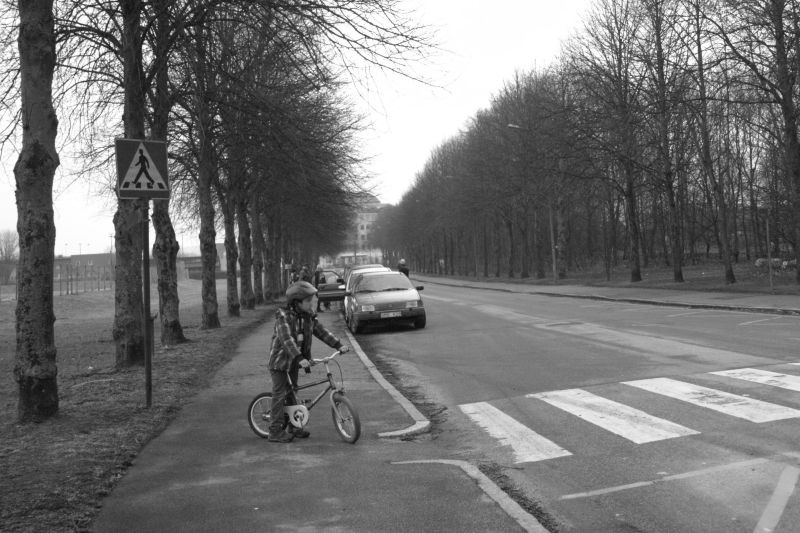
Child crossing the road on a bicycle at a crosswalk
Photo credit: Sigfrid Lundberg, “Be careful at the zebra crossing,” flickr

Earlier in the morning, a car had failed to stop while our child was crossing the highway. We never learned exactly what happened, but the driver didn’t notice the crossing guard, not until it was almost too late. Fortunately, the car did lurch to a halt. But not before sliding into the crosswalk, and pushing over our child on their bicycle. The driver quickly fled the scene, without stopping to see if everyone was ok, and was never identified.

Our child picked themselves up, and finished the ride to school. Put their bike away and quietly went off to class. No one at the school knew what had happened, until the crossing guard came in after his shift, asking at the front office if the child who had biked away was ok. He quit the job later that week. I think his wife had been there that day, waiting in their car, and had seen it all. Both were shaken, and I can’t blame them for not wanting to continue. I’m glad he was there, though, and that he did his best in a tough moment.

For the rest of that year, I walked with our child to school. I can say that I did it for them: even with a new crossing guard, I don’t think they ever felt entirely safe. Part of it came from me, though, feeling the need to manage my own anxiety.

To be able to recognize anxiety, to understand it, and to be better able to deal with it has been an important part of my own life and my practice. Sometimes, my own anxiety has been out of focus, something I can’t quite see clearly. I don’t think I even could see it clearly, I couldn’t recognize it, until I saw anxiety in other people. Saw the ways in which one can be unsettled, uneasy, in ways that seem out of proportion to the danger. Even after I could recognize anxiety, I’ve missed it in my own life, only able to glimpse the shadow of my own anxiety where it falls in my life: in the thoughts that keep turning back to a concern, in vague sense of unease, some new difficulty in sleeping.

Other times, when the danger falls on us, when we get the call that we’ve been dreading, I do see that some part of me feels vindicated.  See? that voice says, quietly, I was right to worry, danger is everywhere, and only looking for some unguarded place to land.

Both kinds experience – the anxieties that are out of focus, and the worries that feel vindicated – have each been obstacles for me at times. When my anxiety floats out of the frame of my awareness, it can be difficult to see all of the ways it distorts my life. Pushing me in a directions I really wouldn’t have chosen – to be overly cautious, defensive, wound too tightly. It’s a constricted way to live, one that makes it difficult to enjoy what is present now, and to be open to finding solutions to the problems that are most likely to manifest.

When my worries end up feeling prophetic, then that justifies me to continue to be overprotective, pessimistic, to spend too much time focused on everything that I might lose. But, even if the worst really does come to pass, what will I have I achieved by practicing that loss countless times in my mind?

If worry and anxiety are a serious part of your life, I don’t know of any better place to start than working with a professional. Such as a therapist who can provide an outside perspective, someone who understands the ways that anxiety can trap us.

For my own, (usually mild to moderate) anxiety, I’ve found that just learning to notice how anxiety shows up in my own life, in my body, emotions, thoughts, has been very helpful. When I can’t see it, anxiety smolders outside of the frame, under the leaves. And sometimes, the feelings of anxiety themselves – constriction, tingling in the body, restlessness, and such – can feel like a threat, leading all of these sensations to intensify.

So, exploring being open to just noticing the sensations that come up with anxiety in an open way has been a useful first step for me. Working to be aware of these sensations, but always with a spirit of curiosity, interest.

At the same time, I might try to bring my attention also to the sensations of breathing (which has long been an important anchor for me in my meditation practice), starting with a couple of deep, abdominal breaths. And, I might also let attention be very broad, and open to sensations from throughout the body, and all of the senses (rather than focusing narrowly on any unpleasant sensations that may be coming from anxiety).

I also give some attention to the roots of my anxiety, down in the thoughts that might be driving or sustaining my unease. Sometimes, those thoughts are very clear, like when a storm came through our area the other day. My spouse and I watched uneasily as an ominous cloud pass by to the north of our home, not quite sure if we should move down to our basement for shelter.

Other times, they may be unclear, hanging somewhere outside of awareness. Then, I’ll try to be more open to noticing where these feelings are coming from, but in an easy, curious way. Maybe there is an email that I need to send, but am dreading. Or a concern about my health or that of a loved one. Or maybe a call that I am expecting, but has not come in.

Feeling for the root of anxiety, I might also notice some tension that comes from a need to control this situation (like I have felt as a parent). Or, any sense that I might be bracing myself for some potential threat (when I worry that a loved one might experience some setback or difficulty).

Exploring anxiety in this careful, direct, and intimate way has been an important first step for me in working with it more skillfully. I try to also be patient, knowing that even if I can see the roots, those difficult feelings may not immediately evaporate. Some of my patience comes from a trust that no matter how it feels in the moment, it will pass eventually. That can help me to accept the discomfort in the moment, while also still looking carefully at the situation.

In the end, if I can avoid the extremes of an avoidant withdrawal on one hand, and a panicked restlessness on the other, I might be better able to judge the challenge in front of me, and plan a better path forward.

Categories
Uncategorized

Are we all in the same boat?

As I think back on my life thus far, it seems that I have had my share of happiness. And, probably equal measures of anger. Or grief. Shame in some moments balancing with joy in the next.

Over the past year, I’ve felt less balanced, with more moments of anxiety and anger, as our loved ones and communities navigate a pandemic. And, it has felt that many of us have struggled to thrive.

I remember a day this past spring, when I was working to finish some tasks in the evening of a busy day. It was late, and I was exhausted, but felt the need to finish this work.

And, when I took a moment to check my email, I found one from a coworker that left me infuriated. The details are not important, but the gist was that they had decided to change a set of procedures. Essentially, there was a last minute delegation , and it would be my job to be the bearer of bad news. This last minute shift felt inappropriate, unjust, to me and I remember feeling so angry at the time.

I realized, in that moment, that my colleague was probably struggling, too, to meet their professional duties, and likely was looking for a way to shift some work, or just opt out of that work. “Is this what it’s going to be like with them, from now on?” I wondered. “Is this what the pandemic has done to them?”

I was still seething when another thought came to me, very clearly. “And is this who I am, now? The person who is always angry?

This week, that moment has been on my mind, that it feels that we are again in a cycle of intensification, and a web of anxiety lays across many of our interactions. I feel entangled, drawn into feelings of frustration, and anger seems always close at hand.

And in so many moments, it can be difficult, for me at least, to find some other way to meet the moment than with anger. But, I have found it helpful at these times to remind myself that our emotional responses have much more to do with our perceptions, and interpretations, of events, than with the event itself.

The importance of our mindset, the frame we give to experience, in our emotional responses was captured beautifully by the Taoist Chuang Tzu, in “The Empty Boat“:

Photo credit: Keith Carver

If a man is crossing a river
And an empty boat collides with his own skiff,
Even though he be a bad-tempered man
He will not become very angry.
But if he sees a man in the boat,
He will shout at him to steer clear.
If the shout is not heard, he will shout again,
And yet again, and begin cursing.
And all because there is somebody in the boat.
Yet if the boat were empty.
He would not be shouting, and not angry.

If you can empty your own boat
Crossing the river of the world,
No one will oppose you,
No one will seek to harm you.

Thomas Merton (1965) “The Way of Chuang Tzu”

This view of anger fits very well with cognitive theories of emotion. When I talk with my students about emotion, and stress, I emphasize how important our mindset (our thoughts, or interpretation of events) is to emotion or the experience of stress. Often, we casually refer to stress as a “thing,” but I remind students that it is more accurate to say that stress is a process: the process of dealing with events (which we may label as stressors) that we believe are threats or challenges.

Stress doesn’t exist in the world: no event is inherently “stressful” in itself. But, stress arises, we bring it with us, in how we meet the world. And while our mindset is not entirely in our control, we do generally have some space to maneuver, and to reframe a potential threat as a potential challenge, or to look more closely at how we are reacting to an event.

In general, the ways in which we interpret an event determines if we experience an emotion (and what emotion that will be). And those emotional responses serve purposes in our lives, to help us deal with the situation before us. But, we may not often take a step back to consider the function of emotions in our lives. Take the emotion of disgust. Have you ever looked closely at disgust, and wondered: why do we have this feeling?

In general, emotions serve valuable functions for our species, and disgust is no exception. What we sometimes will label as “core” disgust helps to protect us from consuming foods which may contain pathogens (such as harmful bacteria). Generally, the idea of eating foods that include waste products (feces), or unusual animal products can elicit very strong reactions of disgust, which can prevent a person from consuming them.

But, if we look closely at our lives, disgust reactions are also applied to many potential foods which are in fact harmless (and some which are quite nutritious). This is a puzzle, because while in some ways we can see the protective function of disgust, it also seems to be overreactive, relative to the actual threats we face today.

While there are still some debates about why this is the case, there is a compelling theory that young children are open (relatively!) to eating new foods in the first few years of their lives. They then learn which foods are safe during that time (by learning to accept foods provided by caregivers). Foods which are not provided during this window tend to be avoided, and will produce disgust reactions if children are asked to eat them. And, children may also learn which foods their community finds “disgusting” by watching the disgust reactions of adults around them (see, for example, this study by Stevenson and colleagues).

If the worst drawback of disgust were that it can make it harder for us to try some new foods, that would probably not be a terrible tradeoff (for the protection from pathogens). But, disgust is a more complex emotion than simply steering our food choices. People often experience disgust in response to situations involving sex outside of community norms, and a number of moral violations. For instance, disgust is “the prototypical response when individuals are asked to imagine sex with close genetic relatives“, e.g. incest (Tybur, Lieberman & Griskevicius, 2009).

Why is this the case? I find the evolutionary approach to explaining disgust, and the varieties of disgust we can feel to be compelling: it explains why disgust is a universal human emotion, and characterizes the “problems” that disgust works to solve. In the domains of sex and morality, disgust may function to shape our behavior to avoid contact with outgroups (to avoid exposure to novel pathogens), and violations of social norms (which could result in social exclusion, see Tybur, Lieberman & Griskevicius, 2009 ). Extended beyond foods, disgust may serve important roles, helping to support our ability to live together socially (and avoid disease).

From the evolutionary perspective, I can appreciate that disgust, like each of our other basic emotions (such as happiness, fear, or sadness), can be seen here as a useful, protective, response. A community of humans who lacked the ability to experience disgust might be more free, in some sense. But, they would also be at greater risk of illness, and other kinds of suffering.

But, while disgust may serve a purpose, like all useful tools, disgust can cut against our wellbeing, too. Especially when we do not see clearly that disgust can be arbitrary as well as overreactive. For foods, the idea of eating mealworms might be disgusting to me. And this feeling of disgust may seem very real, and solid. The very urgency and primacy of the emotion justifies my decision to avoid such foods. And while that reaction is arbitrary, if I have access to plenty of other foods, then my categorization of mealworms as disgusting is not necessarily harmful to me or others.

In many other domains, though, there can be great harm and suffering when our biases, prejudices, are coded into an emotion such as disgust. For example, in a study from 2016 (Vartanian, Trewartha & Vanman), feeling disgust towards obese persons predicted higher prejudice and discrimination. This fits with other work that suggests disgust can be used as a tool against disadvantaged or otherwise marginalized groups by privileged groups. Curtis (2011) said it well, writing that “disgust is used and abused in society, being both a force for social cohesion and a cause of prejudice and stigmatization of out-groups.

In general, I think that the evolutionary approach (to understand the function of emotions) is important, and I see it as complementary to the perspective we see in Chuang Tzu’s “The Empty Boat.” After all, I personally have struggled with my own relationship to my emotional reactions (like when I have felt regret after a bout of anger). But, if emotions and boats are both tools, then maybe emotions are empty as well.

Beyond disgust, we also would expect that each of our basic emotions serve some function. And, that would include anger, an emotional tool that many of us find ourselves reaching for. But, just as fire can be a useful tool in a kiln, an unchecked wildfire can cause great suffering. Anger, can burn through our individual lives like a housefire, or across our society like a wildfire.

Anger tends to result when we feel that we, or someone in our group, has been been treated unjustly, we feel confident that we know the cause of the injustice, and that we feel that another person was responsible for the injustice, and that our action may be able to cause an effect on the situation (summarized in an interesting review of this literature is provided in an interesting paper by Lerner & Tiedens, 2006). In these cases, anger is an emotion that can organize our behavior to try to respond to the perceived offense or mistreatment. In some cases, anger can lead to escalation into aggression (verbal or physical), which seems to be common (especially verbal aggression in online settings now).

Photo credit: Antoine K

But, anger often produces changes in behavior in more subtle ways, as well. In normal, healthy relationships, one important function is to trigger renegotiation (for instance, see this interesting work by Sell, Tooby, & Cosmides, 2009).

In such cases, where perhaps we have become frustrated with a partner or friend, expression of anger can serve as a signal, and can motivate the person who is the target to focus on the angry person, and consider if their grievance has merit. Anger, in many cases, can be a healthy part of any relationship, if it leads to communication and a better understanding for all parties. This is not meant to justify anger, though: in many cases, anger is a sign that communication has already failed, and attention to the relationship might have prevented, or blunted, the conflict.

And, even though anger can be employed as a useful tool, we likely can think of times in our own lives where anger did not lead to a healthy resolution. Many times, anger draws out anger, as each feels that only their own grievances are valid.

Or anger seeks not to be heard, but for submission.

In those cases, it may have been better, for ourselves and our communities, if we had not reached for anger as a tool. If we could see that, perhaps we don’t know all of the facts of a perceived injustice. Or, perhaps we misunderstand the motivations of the person we are angry with. Much of the anger we see now seems to be built, in part, on a sense that our goals are in conflict, but I wonder if that is really the case, at a deeper level.

While it is certain that not everyone agrees on the most important goals (for our individual lives, for society, for the world), I personally hope for the best life, for the most people. For as many as possible to look on this life as a joy, a miracle, as deeply and as often as possible. And, at least in my own experience, neither fury nor disgust has helped me live that kind of life.

All of the boats really are empty. So, if we are on a collision course, let’s steer around one another, or maybe help one another back to safe harbor.